Blackbiird Fly
An Ode to Beyoncé’s Genius & the Reclaimed Legacy of the Black Cowboy & Cowgirl

Like 27 million others this past Christmas day, I tuned into the #BeyoncéBowl during the Houston Texans vs. Baltimore Ravens game.
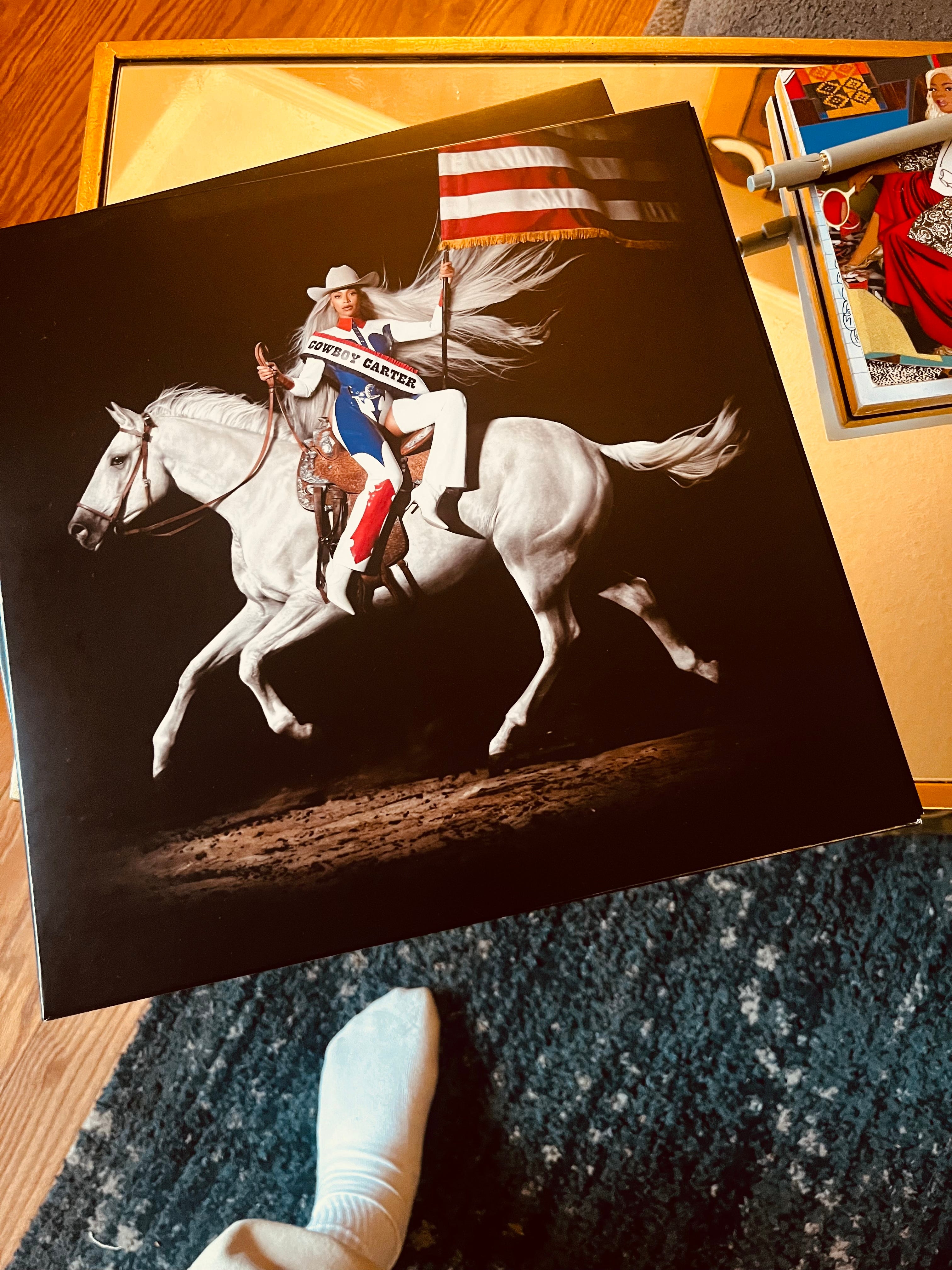
We witnessed history when Beyoncé rode in on a Lippinazzer horse draped in white and silver, joined by a cowboy radiating unshakable swagger. Against the backdrop of her hometown, Houston, Beyoncé delivered a masterclass in rewriting narratives and reclaiming the legacy of the Black cowboy and cowgirl—a history that has long been overshadowed and untold.
Beginning her set with 16 Carriages from her Cowboy Carter album, she effortlessly weaved between an 18-wheeler emblazoned with “Cowboy Carter” alongside a myriad collection of slabs dripping in candy paint, spinners, and hydraulics. The performance oozed like the ultimate visualizer, with every element present carrying meaning. The Lippinazzer is the grand dame of intentional metaphors symbolizing the whitewashing of black culture, as the horses are generally born with a brown or black coat that gradually turns grey and then white.
The red-and-white runway nods to the American flag, symbolizing valor and purity. In contrast, American flags draped with sheer plastic suggest a vision of America that feels visible but untouchable for many. Beyoncé’s critique of the erasure of Black contributions to country music and cowboy history is a story she ensured would not go untold.
Her performance paid homage to trailblazers like Bill Pickett, the Black cowboy who invented “bulldogging” and revolutionized rodeo, and Stagecoach Mary, the first Black woman to drive a stagecoach for the U.S. Postal Service. As noted by Smithsonian Magazine, one in four cowboys were Black. Despite this, Black cowboys have often been overlooked in mainstream culture despite being the backbone of the cowboy legacy. These are not footnotes in history—they are its foundation, and Beyoncé brought this center stage.
The resonance of Beyoncé’s performance doesn’t end with history books. It reverberates through modern cowboy culture, especially in my current home of Compton, where the Compton Cowboys embody the legacy of Black equestrians. These modern-day trailblazers redefine urban cowboy life, breaking stereotypes and proudly showcasing the enduring spirit of the cowboy.
Her rendition of Blackbird, the Beatles’ classic inspired by the Little Rock Nine, was another mic-drop moment. With the song created to honor the resilience of Black students who integrated schools amid violent opposition, Beyoncé was joined by rising Black women country artists—Tanner Adell, Tiera Kennedy, Reyna Roberts, and Brittney Spencer—highlighting that country music also belongs to us. As Melba Beals, one of the Little Rock Nine, once shared with NPR when interviewed after the release of Beyonce’s Blackbird, the song reminded her of her grandmother’s advice: “You have to keep going, no matter what.” Beyoncé’s delivery echoed that determination, especially alongside rising Black women country stars.
As a Black queer woman raised in the South, I felt the gravity of this performance. From the Carolina hills of my childhood to the streets of Compton, which I now call home, the cowboy spirit runs deep. Beyoncé’s tribute wasn’t just a performance—it was a reckoning, a reclamation, a reminder that our stories are ours to tell.
The set flowed seamlessly—from Shaboozy’s unapologetic words on Sweet Honey Buckin’ (“Country boy ’til the day that I’m dead,” a line I scream with pride) to Dolly Parton’s Jolene, Texas Southern University’s Ocean of Soul marching band added brilliance to the entire performance. Blue Ivy’s presence alongside her mother symbolized legacy in motion. Even Post Malone’s genre-blurring cameo highlighted music’s power to transcend barriers.
Beyonce alchemized history into art and pain into power. She redefined country music and the American dream on one of America's most-watched stages. This moment belongs to us—Black women and men, reclaiming old narratives and writing new ones. It’s a reminder that we’ve always been here, shaping every beat, every verse, and every dream.
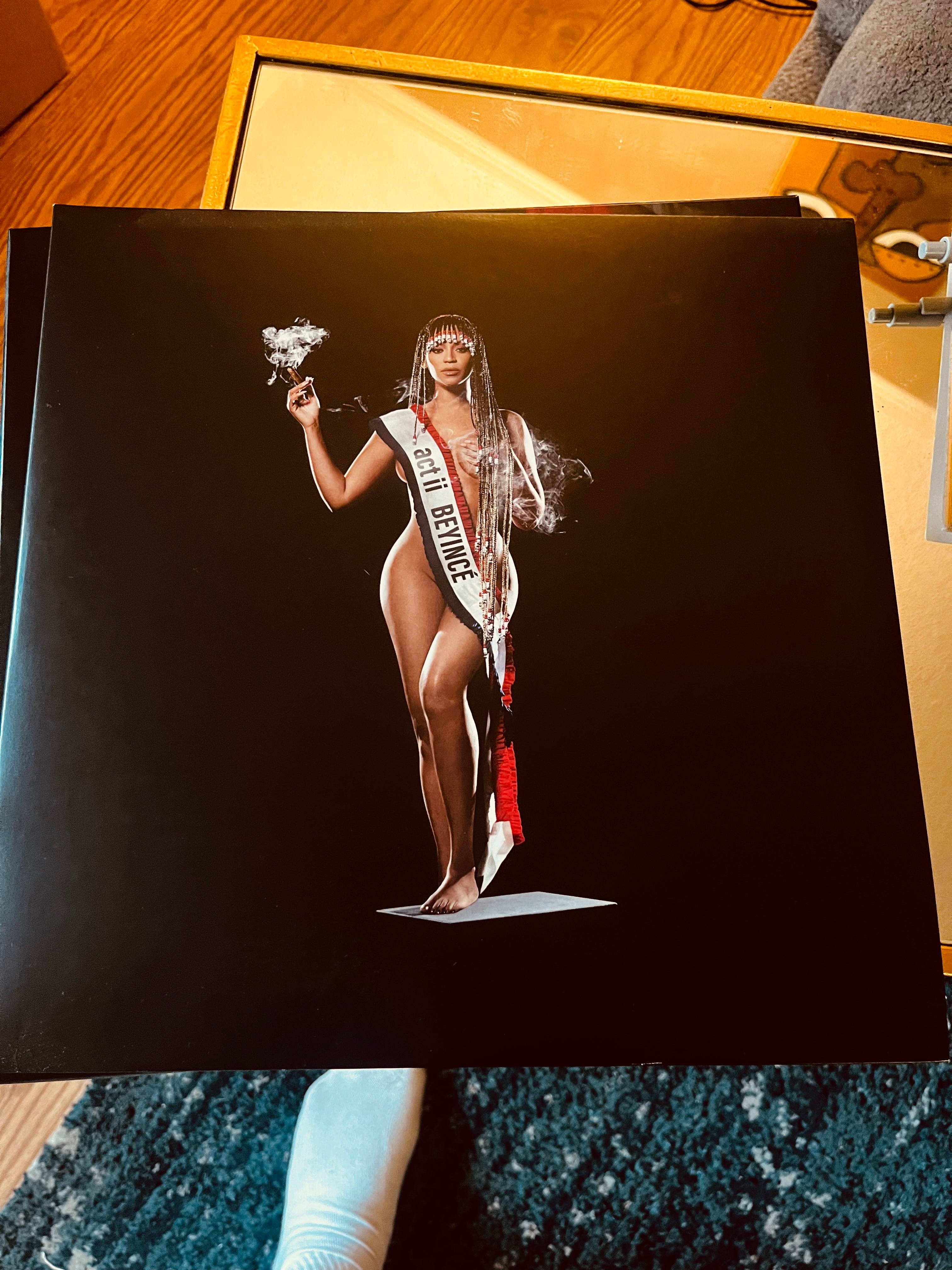
Beyoncé’s varied vinyl covers for Cowboy Carter reflect the diversity within the Black community, a reminder that we are not a monolith but a mosaic of experiences, styles, and stories. As Blackbird soars, its lyrics resonate louder than ever: “You were only waiting for this moment to arise.